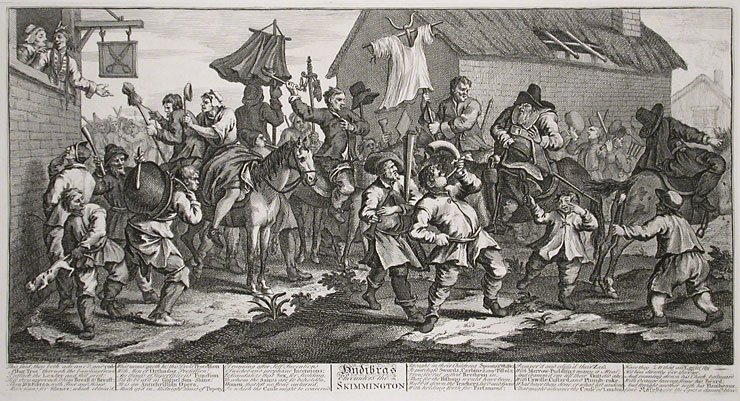
Imagine a loud procession winding through your neighborhood, the sound of pots and pans clanging in a chaotic symphony. This was no ordinary celebration; it was a charivari, a folk custom designed to publicly shame a member of the community.
In its most extreme form, charivari involved dragging an alleged wrongdoer through the streets, subjecting them to the ridicule of onlookers. Participants would create as much noise as possible, aiming to demonstrate their disapproval and make the victim feel utterly embarrassed. Sometimes the accused would be dunked in water, adding to the humiliation.
For those who wanted to avoid physical confrontation, a neighbor might step in to impersonate the wrongdoer. This person would be paraded around, singing lewd verses and further mocking the actual offender. In cases where no person was targeted, effigies were used instead, often culminating in the figure being burned or otherwise abused.
Charivari served as a community's way of enforcing social norms. Marriages deemed inappropriate, such as those between an older man and a younger woman, were common targets. Instances of infidelity, or even the remarriage of widows and widowers, could also provoke such a public spectacle.
In England, regional variations of charivari existed, each with their own unique terms and methods. In the North, the practice was known as "stang riding," while in the South it was called "skimmington." Regardless of the name, the goal remained the same: to publicly humiliate those who had breached social codes.
Even after the Second World War, echoes of this tradition lingered in some places. Despite its decline, there were reportedly some examples noted in certain communities as late as the 1970s. Charivari reflected a blend of justice and celebration, showcasing the absurd lengths to which communities would go to uphold their values.
What might seem like a bizarre tradition today was an accepted form of communal expression, revealing the strange ways in which societies have sought to correct behavior.