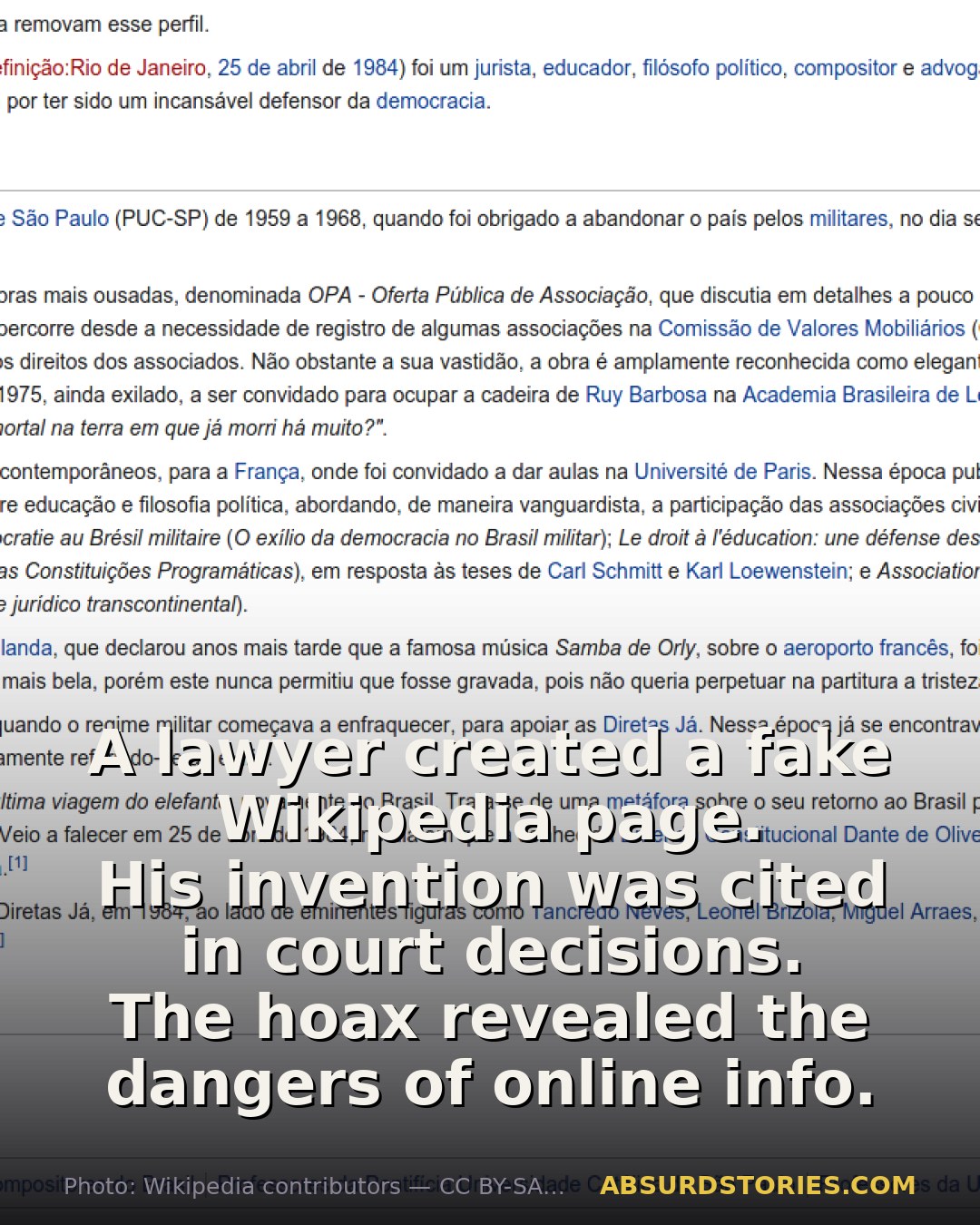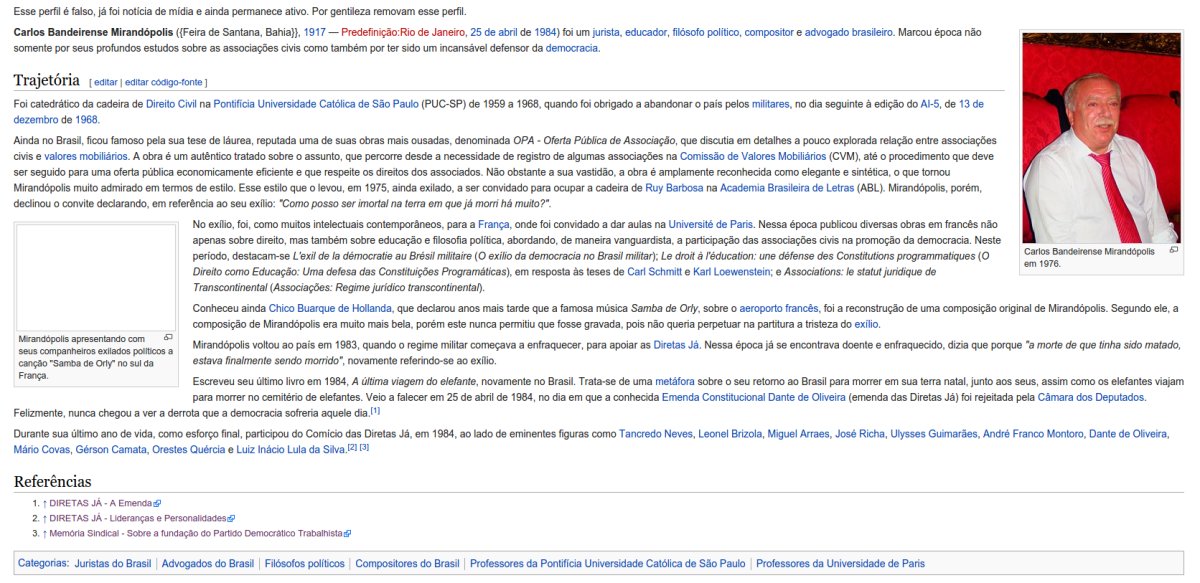
The existence of Carlos Bandeirense Mirandópolis sent shockwaves through various sectors of Brazilian society. This fictional character was invented in 2010 by two Brazilian lawyers as a prank aimed at a research intern. They fabricated a Wikipedia entry claiming Mirandópolis was a renowned jurist, professor, and participant in significant political movements. They claimed he had met famous composer Chico Buarque while in exile and inspired one of his songs.
For years, the made-up story gained traction. Mirandópolis was referenced in a decision by the Rio de Janeiro Court of Justice, featured in a documentary, and became part of an undergraduate thesis. The fabricated narrative, complete with a false photo, took on a life of its own, illustrating how misinformation can spread unchecked.
The hoax unraveled in February 2016, following a report that contacted various institutions for verification. Both the Pontifical Catholic University of São Paulo and Chico Buarque’s team denied any knowledge of him. Court officials clarified that the citations stemmed from unreliable sources. The revelation prompted discussions about the reliability of online information and the ease with which false data can be accepted as fact.
In the aftermath, the page was deleted from Wikipedia, and the incident became a cautionary tale in legal education, highlighting the importance of verifying sources before accepting them as truth. Even years later, the name of Carlos Bandeirense Mirandópolis appears in legal discussions as an example of the consequences of misinformation.