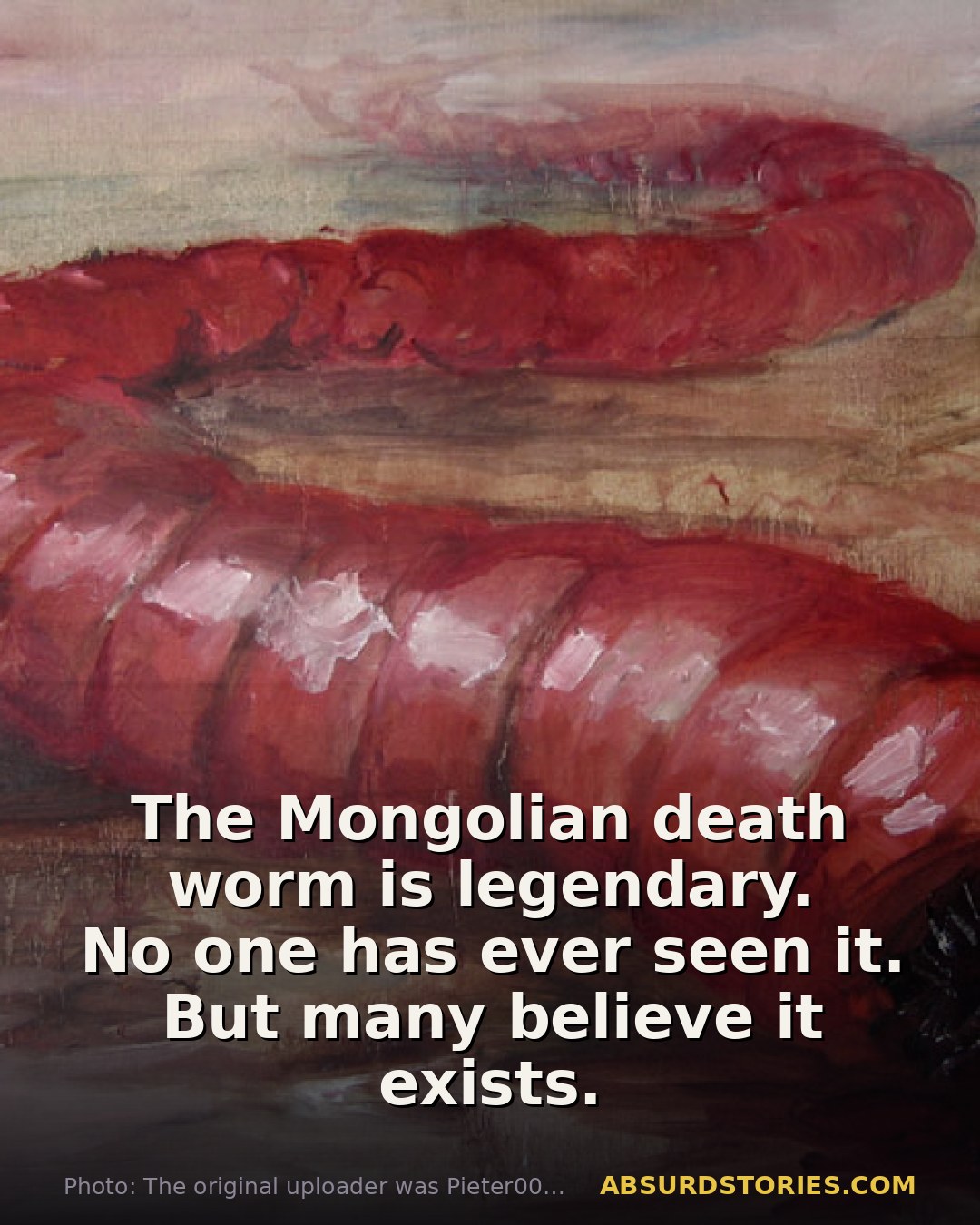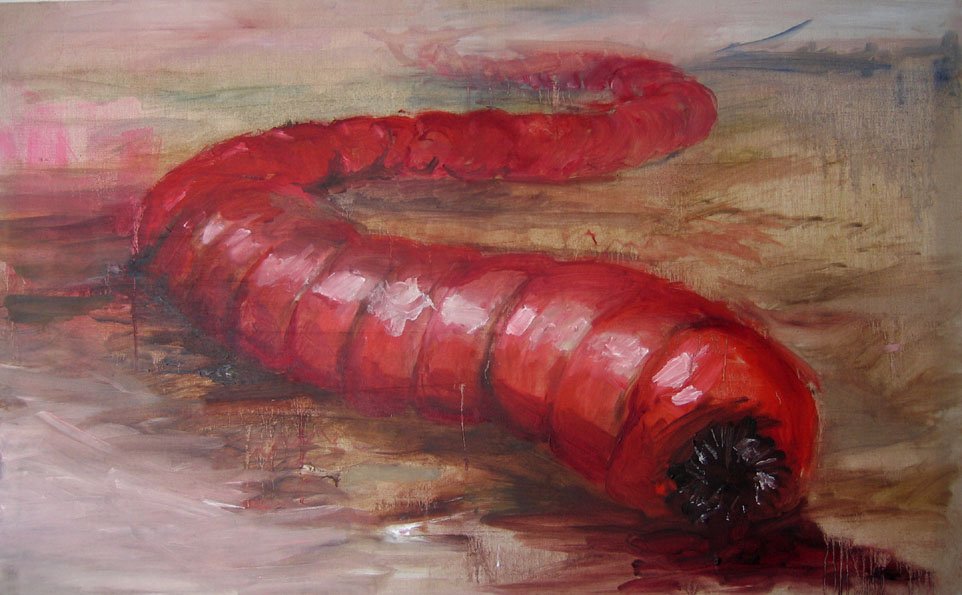
In the vast and arid Gobi Desert, stories emerge of a creature that remains elusive. The Mongolian death worm, believed to be about two feet long and without a head, is said to be incredibly venomous. Touching it supposedly results in instant death.
This cryptid has fascinated both amateur enthusiasts and serious researchers alike for decades. The first major mention in the West came in 1926 from Roy Chapman Andrews, who recounted the beliefs of Mongolian officials who had never seen the creature but described it in detail. Andrews himself was skeptical about its existence.
According to some accounts, the worm travels underground, creating waves of sand on the surface. It is rumored to have the ability to kill at a distance, either by spraying venom or emitting an electric charge. While reports suggest it usually stays underground, it may appear after rain or near water sources.
Investigations into the creature have occurred sporadically. Between 1990 and 1992, Ivan Mackerle led expeditions in search of the worm, employing methods inspired by fictional works. However, no definitive evidence was found. Similarly, a 2005 expedition led by zoological journalist Richard Freeman concluded that the tales were likely exaggerated or based on misidentified species.
Despite the lack of concrete evidence, the legend endures. In popular culture, the Mongolian death worm has inspired various forms of media, including movies and video games. Its mythical nature continues to captivate the imagination, blending reality with fiction in the harsh backdrop of the Gobi.
The Mongolian death worm remains a creature of myth, shrouded in mystery.