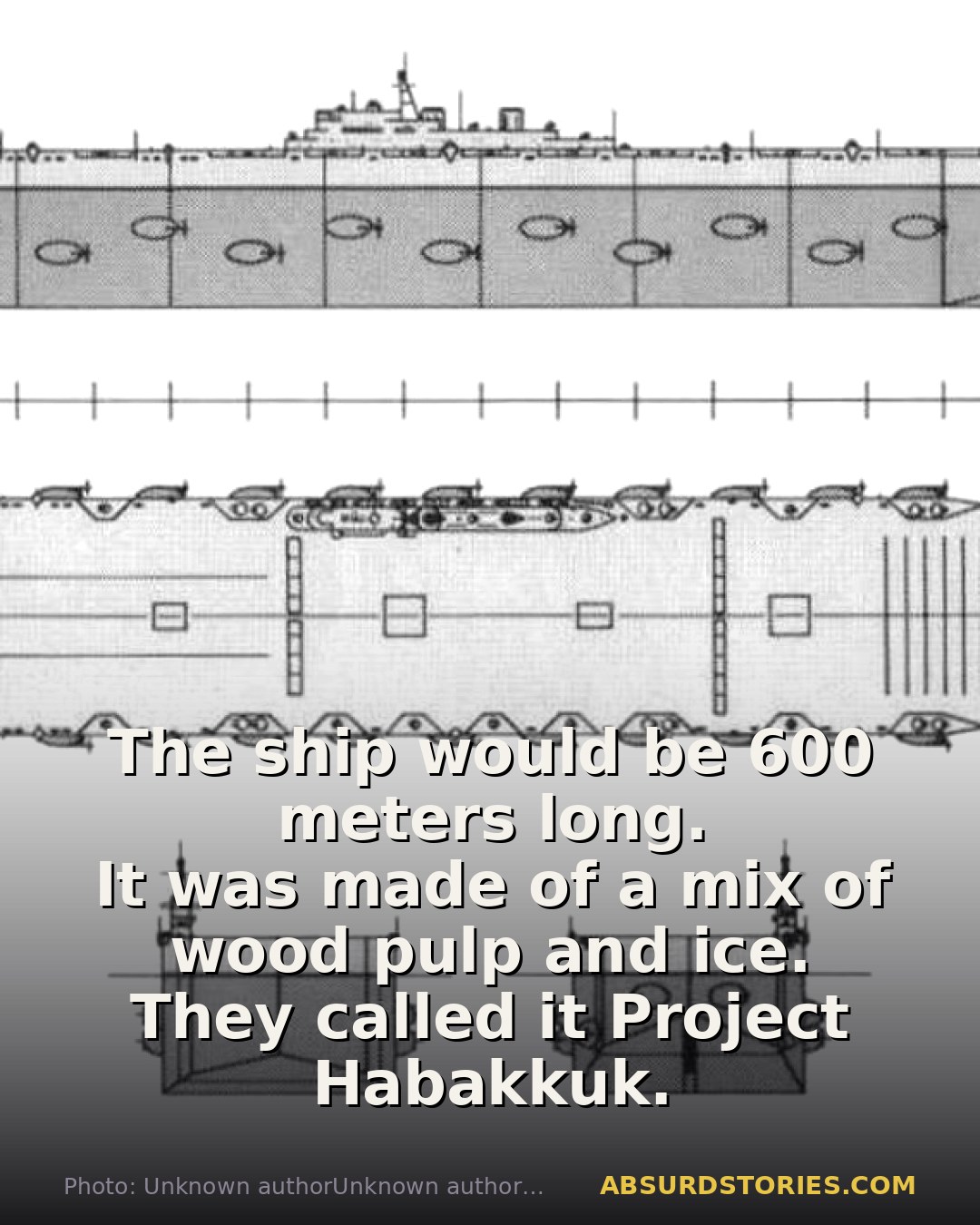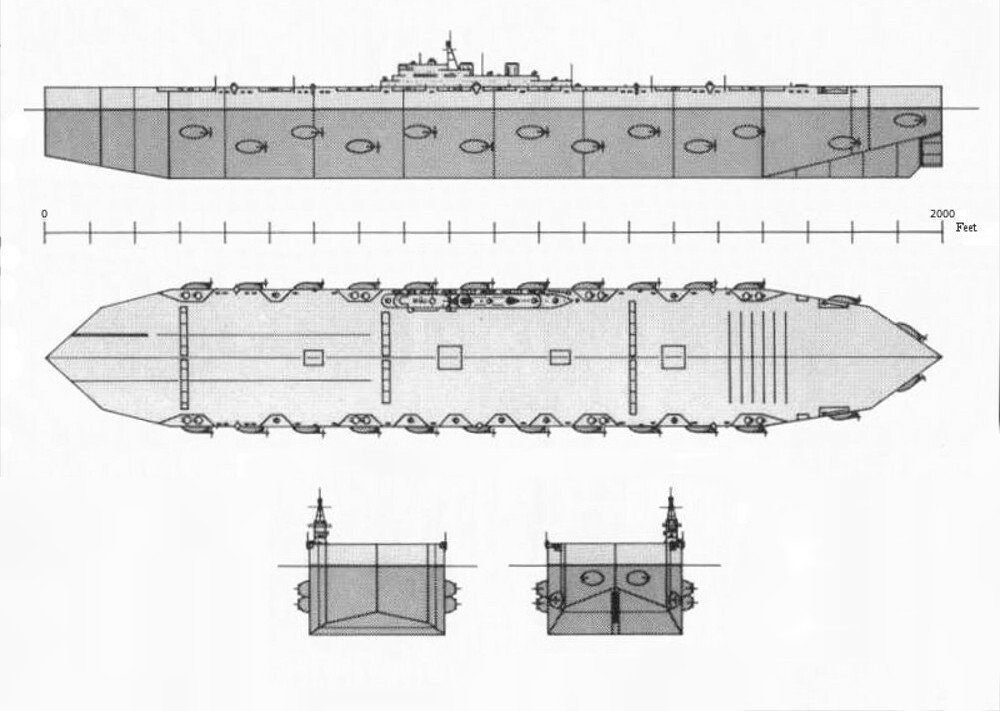
Imagine a massive aircraft carrier, a floating fortress made entirely of ice. This was the vision behind Project Habakkuk, a British endeavor during World War II.
The plan was to create the largest ship ever, stretching an incredible 600 meters in length, far surpassing existing naval giants. The idea came from Geoffrey Pyke, who thought this ice-based vessel could combat German U-boats roaming the mid-Atlantic.
Pyke's inspiration struck while he was in the United States, grappling with how to protect Atlantic convoys that were beyond the reach of land-based aircraft. With steel and aluminum in short supply, he proposed using pykrete, a mixture of wood pulp and ice, as an innovative solution. This hybrid material was not only lighter but also required significantly less energy to produce than steel.
Pyke sent his ambitious proposal in a diplomatic pouch directly to Lord Louis Mountbatten, who was intrigued enough to pass it on to Winston Churchill. Despite earlier dismissals of similar ideas, the notion of an ice island took root.
However, the project faced numerous challenges. The concept of a floating ice structure wasn’t new; others had attempted similar projects in the past. Pyke's own concept was met with skepticism, yet he persisted, leading to the development of pykrete.
In early 1942, experiments were conducted to test the feasibility of creating a large-scale model of the ice carrier. A prototype was built at Patricia Lake in Canada, overseen by conscientious objectors who were unaware of the true purpose of their work. The prototype was 60 by 30 feet and required constant refrigeration to maintain its icy form.
As tests progressed, it became clear that while pykrete had impressive properties—it was stronger than ice and melted slowly—the logistical demands of cooling and maintaining such a vessel were daunting. The project ultimately stalled due to rising costs and the advent of more effective aircraft, leaving the ambitious vision of an ice aircraft carrier unrealized.
Project Habakkuk remains a fascinating footnote in military history, showcasing the lengths to which ingenuity can stretch even when faced with the limitations of materials and technology.