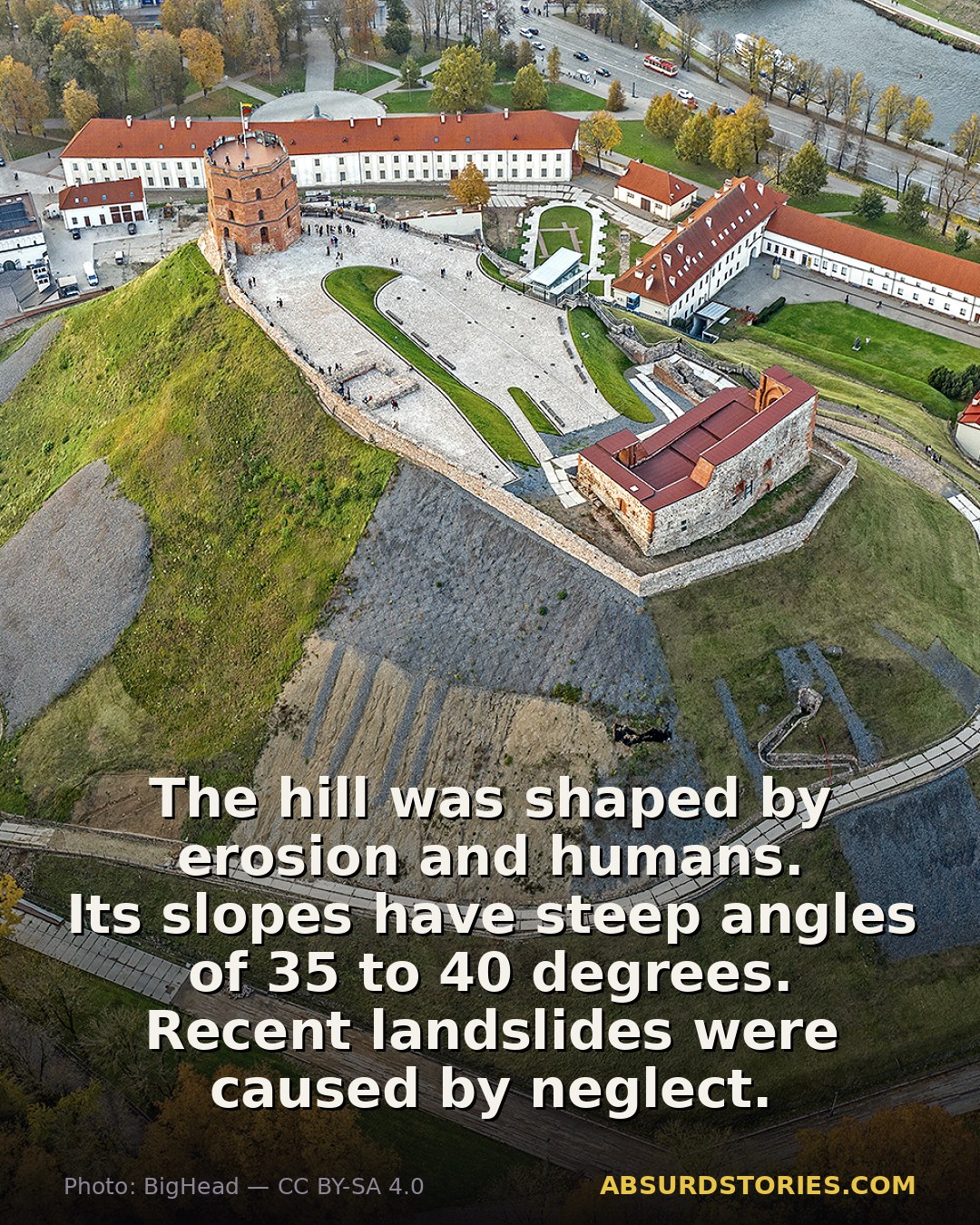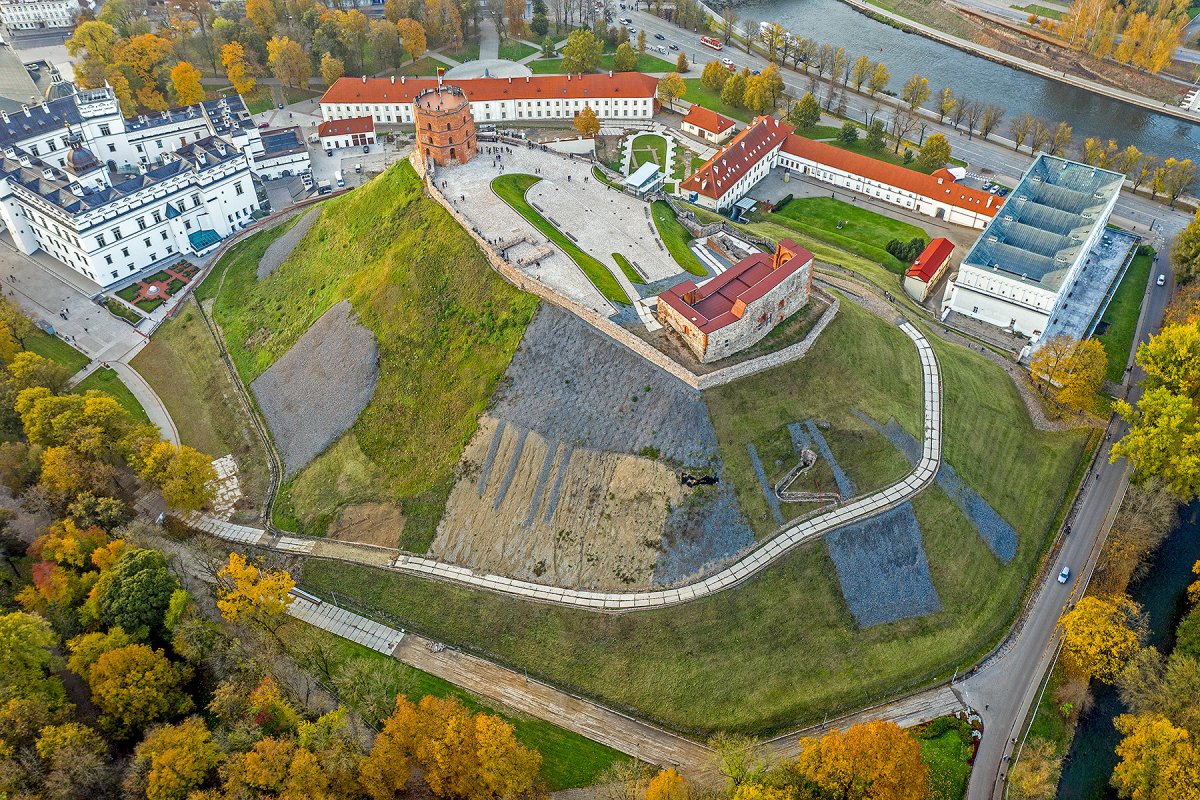
Castle Hill in Vilnius is a site with a rich history. It features Gediminas' Tower, a notable remnant of the Upper Castle from the Middle Ages. Over the years, the hill has been altered significantly by both natural erosion and human intervention.
The hill stands 142 meters above sea level and 48 meters above the surrounding terrain, with steep slopes that range between 35 to 40 degrees. Originally, it was almost devoid of trees. However, during the early 20th century, vegetation began to grow on its slopes. This was reversed during slope management efforts between 2011 and 2013, when trees were cut down to maintain the hill's structure.
In the 21st century, the erosion of Castle Hill has worsened. A series of landslides have been recorded, attributed to multiple factors. Construction of the Gediminas Hill Lift, extensive restoration of the nearby Palace of the Grand Dukes, and general neglect have all contributed to the hill's instability. Weather conditions have further exacerbated the issue.
To address these challenges, slope stabilization work was conducted from 2017 to 2022. This effort aimed to prevent further degradation of this historical landmark, which continues to hold significant cultural value for the city.