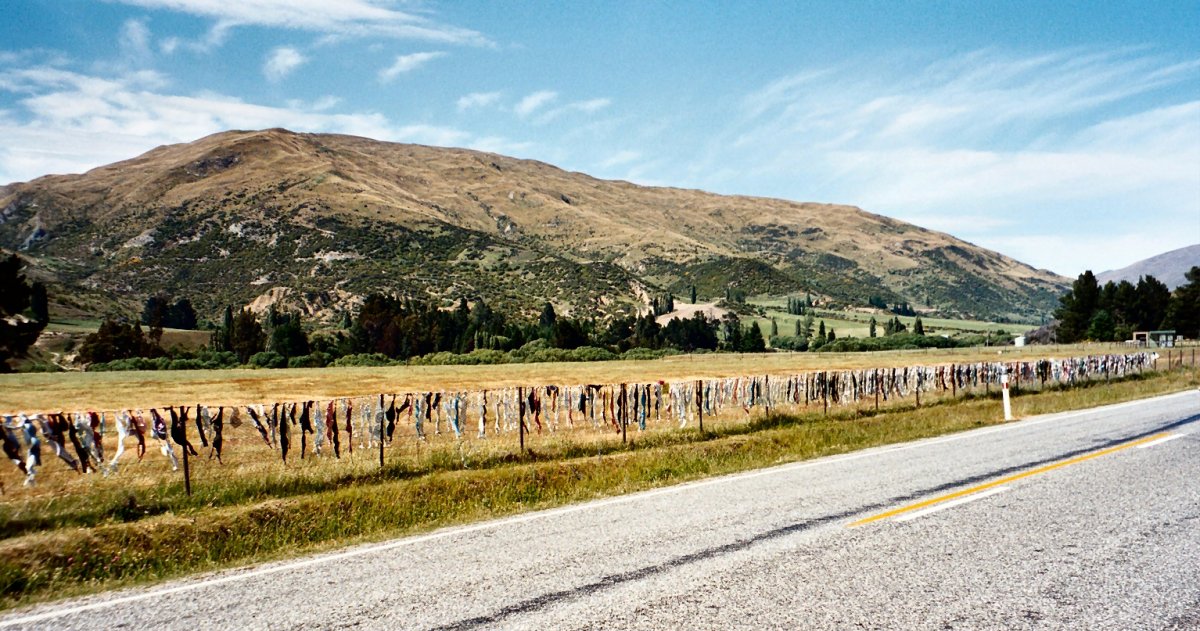
In a rural area of New Zealand, a fence became the unlikely repository for hundreds of bras. This peculiar phenomenon began between Christmas 1998 and New Year 1999 when four bras were fastened to a fence along a public road. The reason for this initial display remains a mystery, but it caught the attention of locals and visitors alike.
As news of the bra fence spread, more people began contributing to the collection. By February 1999, the number of bras had swelled to about 60, but they were mysteriously removed shortly thereafter. This act only fueled the story, leading to greater media coverage and an influx of new contributions. By October 2000, the count reached around 200 bras before the fence was cleared again.
Despite its status as a quirky tourist attraction, the bra fence sparked controversy. Some locals considered it an embarrassment and a traffic hazard. Various attempts to have it removed were made, particularly in early 2006, alongside a significant cleaning that saw around 200 bras eliminated. Critics voiced concerns about the potential offense it might cause, especially to international students in the area.
However, John Lee, a local sheep farmer, acted as the unofficial guardian of the bra fence, countering the negative views by emphasizing that most feedback was positive. His resistance to removal efforts continued until April 2006, when local authorities deemed the installation an eyesore and ordered its dismantling.
In November 2014, the story took another twist. A couple took custodianship of the fence, relocating it to their private property about 100 meters away. They introduced a donation box for the New Zealand Breast Cancer Foundation, rebranding the site as “Bradrona.” The effort quickly gained traction, raising over $30,000 for the charity by 2017.
Local businesses, such as the adjacent Cardrona Distillery, capitalized on this newfound attention by producing special pink gin and vodka, with proceeds going to breast cancer awareness. By 2018, Bradrona had raised over $70,000, and weekly donations reportedly reached an impressive $500 by 2019. In June 2024, it was reported that donations reached $180,000.
This unusual fence transformed from an oddity into a source of community pride and charitable fundraising.