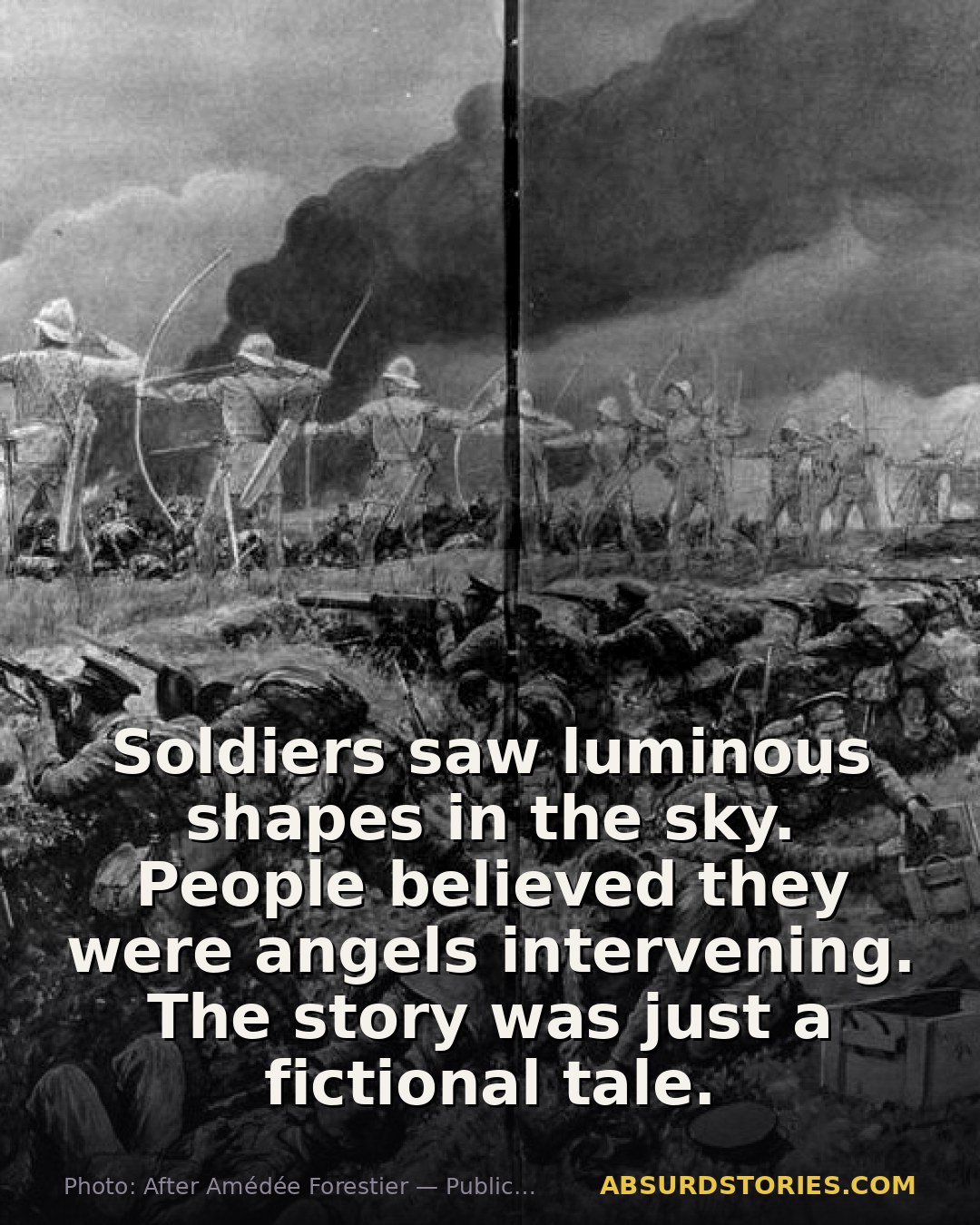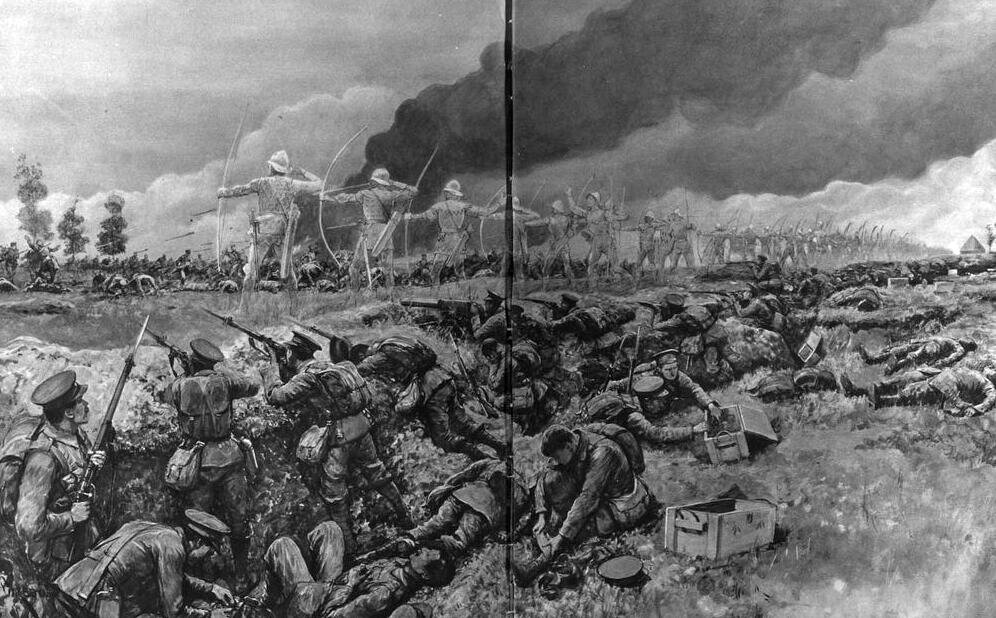
In the midst of World War I, British soldiers fighting in the Battle of Mons claimed they were aided by angelic beings. Accounts described luminous figures appearing in the sky, inspiring hope and courage amidst peril.
The origin of this phenomenon traces back to a short story by Arthur Machen, published in September 1914. Titled "The Bowmen," it depicted phantom archers from the past coming to the aid of British troops. Despite being a work of fiction, readers widely believed it to be true, leading to confusion and reports of supernatural appearances during the battle.
As the story gained traction, soldiers began recounting visions of angels, St. George, and even Joan of Arc, further fueling the legend. These reports were embraced by the public, with many interpreting them as divine intervention against the invading German forces.
This phenomenon evolved into a cultural sensation, with sermons, songs, and illustrations celebrating the alleged appearances of these celestial warriors. Machen, perplexed by the widespread belief in his fictional tale, attempted to clarify that it was not based on truth. Yet, his efforts were met with resistance, as the story had already taken on a life of its own.
What began as a literary creation transformed into a symbol of hope and faith for many during a dire time in history. The Angels of Mons became a remarkable example of how fiction can shape belief and inspire people.