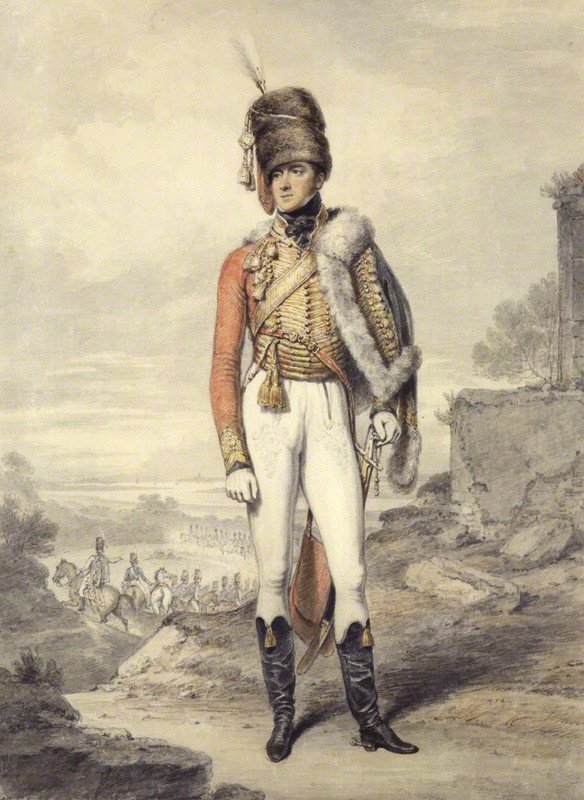
During the Battle of Waterloo, a nobleman lost his leg, and it became an attraction for curious visitors.
Lord Uxbridge's leg was shattered during battle, necessitating its amputation above the knee. After the operation, the leg was buried in a garden, which turned into a shrine. The burial site was marked with a tombstone celebrating the leg's owner's bravery.
Tourists flocked to see what became of Lord Uxbridge's limb, which even drew attention from high-ranking European figures. They first viewed the bloodstained chair where the amputation took place, then were led to the garden and shown the leg's resting place.
However, the leg's story took a bizarre turn when a storm uprooted the tree under which it was buried, exposing the bones to the public. This led to diplomatic tensions, as the nobleman's family demanded the remains be returned to England.
Instead, the Paris family who owned the garden offered to sell the bones back to the Uxbridge family, which made for an enraged response. In a twist, the Belgian Minister of Justice intervened and ordered the remains to be reburied.
Yet the bones did not find their way back underground right away. They were kept hidden until a later discovery led to the last living Paris incinerating them to avoid scandal.
What began as a heroic sacrifice turned into a tale of awkward tourism and a lost relic.